

How to Build a Capsule Nappy Bag for Real Life

The nappy bag is one of those things that sounds simple until you are standing in the driveway, baby on hip, wondering why it weighs as much as a small dog.
For many parents, the nappy bag starts as a well-meaning collection of everything that might possibly be needed and gradually turns into a chaotic catch-all that takes ten minutes to search through. It is heavy, it is overpacked, and half of it never gets used.
A capsule nappy bag takes a different approach. Rather than packing for every possible scenario, it focuses on a small, thoughtful selection of items that cover real, everyday situations reliably and without bulk.
This guide walks through exactly what belongs in a capsule nappy bag, what you can confidently leave behind, and how choosing the right products makes the whole system simpler and lighter.
What Is a Capsule Nappy Bag?
A capsule nappy bag is a pared-back, intentional approach to packing for outings with a baby or toddler.
The idea borrows from capsule wardrobe thinking: fewer items, each chosen carefully, that work together and cover most situations without excess.
For parents, this means packing only what you genuinely use on a typical outing, trusting that system, and not carrying backups for situations that rarely happen.
The result is a bag that is lighter, faster to pack, easier to find things in, and far less stressful to manage on the go.
The Core Principle: Pack for the Outing, Not for Every Outcome
The biggest shift in building a capsule nappy bag is moving from "what if" thinking to "what do I actually need" thinking.
Most outings with a baby or toddler involve:
- One to three nappy changes
- One or two feeds
- A clothing change if something goes wrong
- Wipes for hands, faces and spills
That is genuinely all most outings require. A capsule approach packs to meet that reality, not to prepare for a worst-case scenario that may never come.
What to Pack in a Capsule Nappy Bag
Nappies
For a standard two to four hour outing, two to three cloth nappies is typically enough. For a longer day out, three to four covers the majority of situations.
If you are using cloth nappies, packing pre-assembled nappies with inserts ready to go saves time during changes and means less to manage at the change table.
For guidance on building your overall nappy stash, our How Many Cloth Nappies Do You Really Need? guide covers full-time and part-time approaches in detail. New to cloth nappies altogether? The Cloth Nappy Starter Guide is a great place to begin.
A Reusable Wet Bag
A wet bag is the item that makes cloth nappies genuinely practical away from home.
Used nappies go straight into the wet bag, which keeps everything contained, odour-managed and separate from clean items. Once home, nappies are transferred to the dry pail and the wet bag goes into the wash with them.
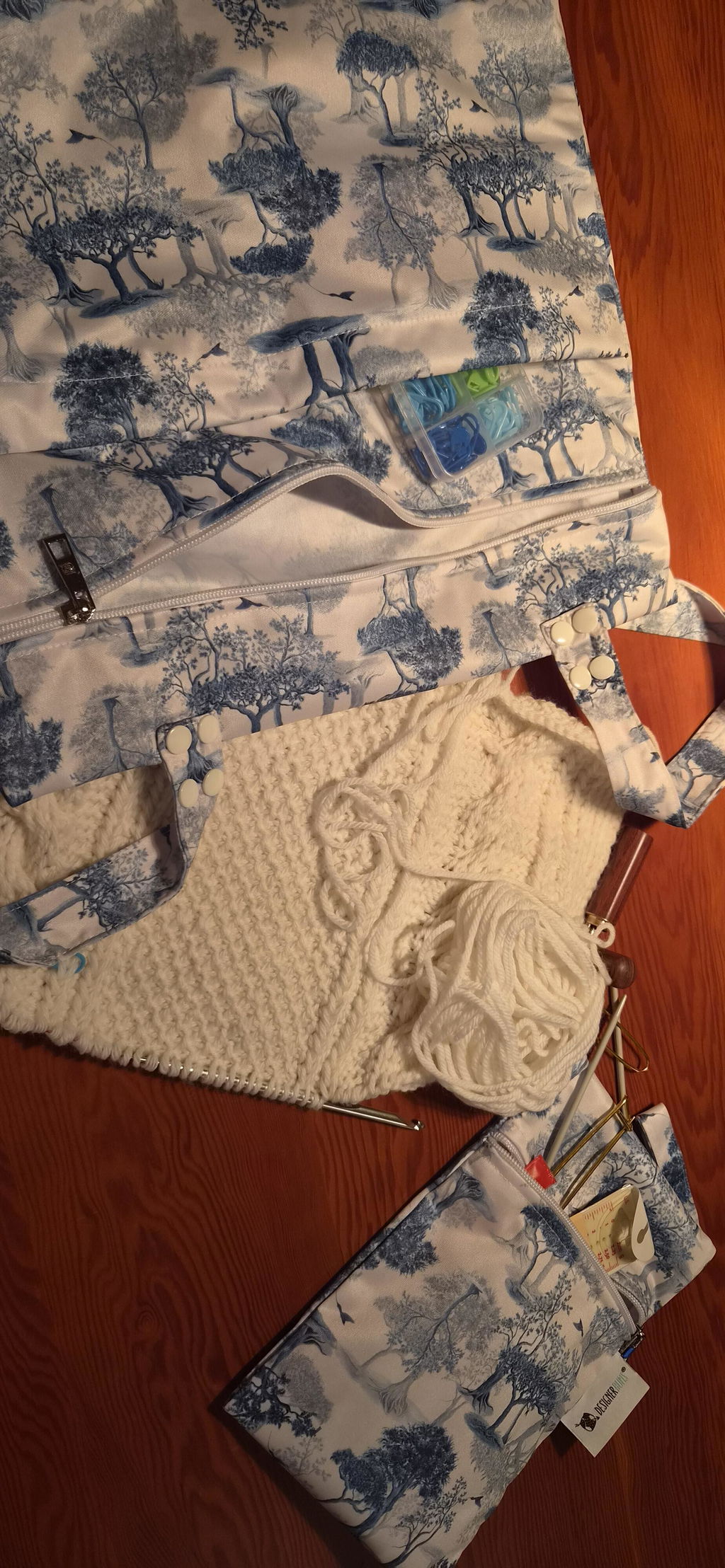
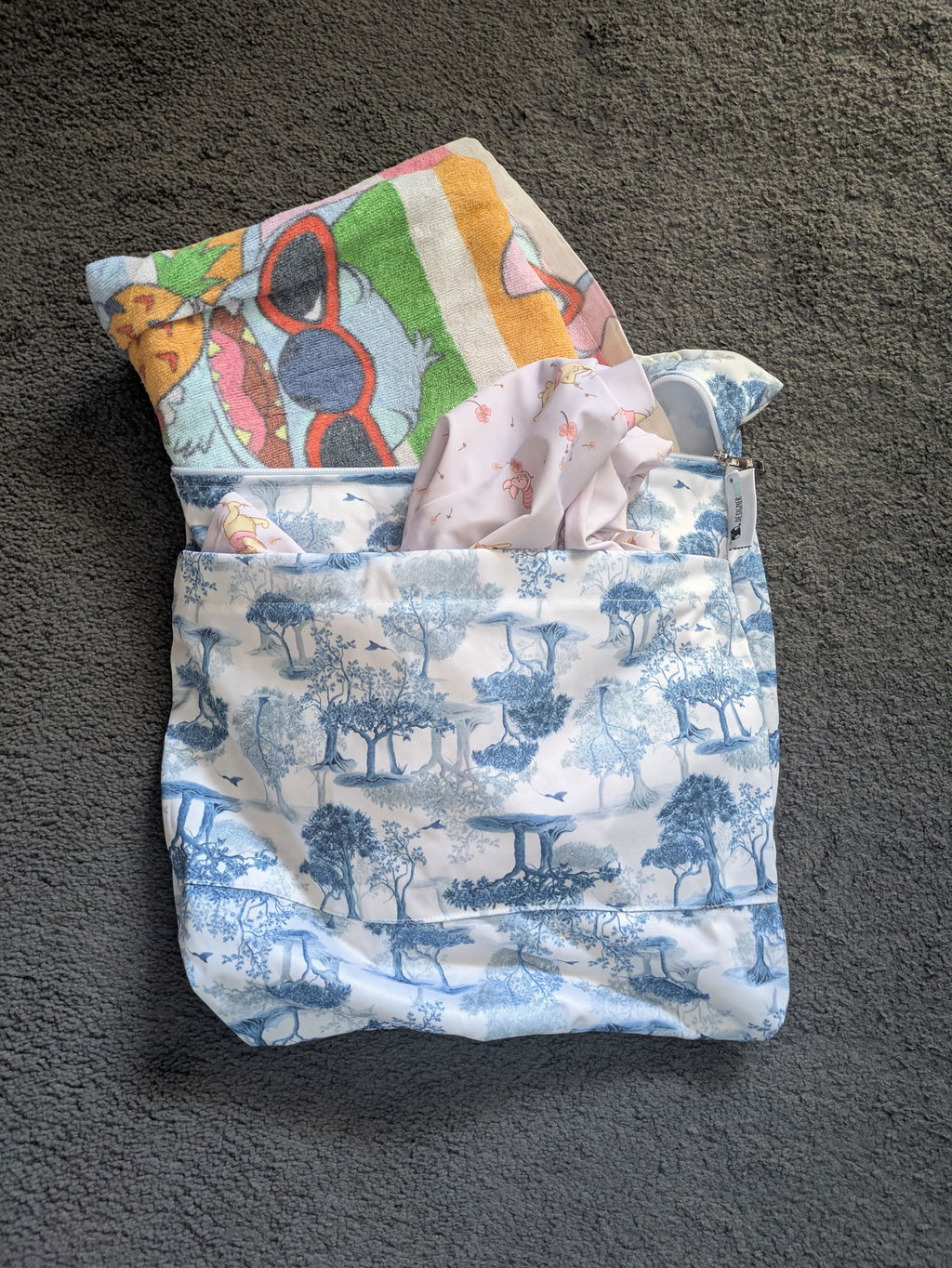
Designer Bums wet bags are available in several sizes to suit different bag setups. A regular wet bag works well for most day outings, with its double-pocket design allowing clean and used items to be kept separate. A mini wet bag is ideal for wipes, nursing pads or smaller items. Browse the full Designer Bums Wet Bags collection to find the right size for your routine.
A wet bag replaces the need for disposable plastic bags entirely and is one of the simplest swaps a family can make. For more on how wet bags work across different situations, our Reusable Wet Bags Explained guide covers everything you need to know.
Cloth Wipes
Cloth wipes are one of the most underrated items to pack. They are versatile, easy to use and take up almost no space.
Pack five to eight wipes for a standard outing. They can be used dry or slightly damp depending on your preference and can handle nappy changes, messy hands, food spills and face wipes all in one.
After use, they go straight into the wet bag with the nappies and are washed as part of the same routine. Browse the Designer Bums Cloth Wipes collection.
A Spare Outfit
One spare outfit is almost always enough. Two is occasionally useful but generally adds unnecessary bulk.
Choose something easy to get on and off, particularly if your child is at the wriggling stage. A onesie or two-piece set that does not require much fiddling works well.
Feeding Essentials
Pack only what you actively use for feeding. This might include:
- A muslin or small cloth for burps and spills
- Reusable nursing pads if you are breastfeeding
- A bottle or snack if your baby is at that stage
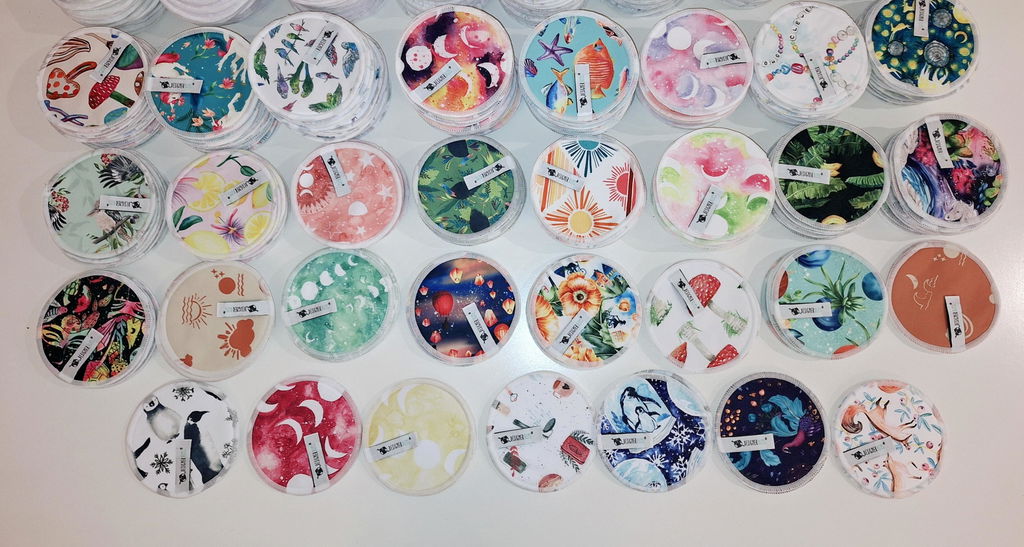
Keep this section minimal. Most parents find they use far fewer feeding accessories than they initially packed. If you are breastfeeding, Designer Bums reusable nursing pads are compact enough to tuck into any wet bag or mini pouch.
A Compact Change Mat
A compact, fold-flat change mat is worth including for outings where facilities are limited or hygiene is a concern. Look for one that wipes clean easily and folds small enough to slip into the side of your bag. Browse the Designer Bums Change Mats collection.
What You Can Leave Behind
Part of building a capsule bag is giving yourself permission to leave things out.
Common items that can stay home for most outings include:
- More than one spare outfit (unless a particularly messy day is planned)
- A full pack of disposable wipes if you are already carrying cloth wipes
- Toys beyond one or two small items
- Extra accessories that duplicate something already in the bag
- "Just in case" items that have never actually been needed
The first few times you pack a smaller bag can feel uncertain. Most parents find that within a few outings, the capsule approach feels completely natural and they wonder why they ever packed more.
How Reusables Simplify the Capsule System
One of the quiet benefits of using reusable products is how well they work together as a system.
Cloth nappies, cloth wipes and a wet bag create a closed loop: everything used goes into the wet bag and comes home to be washed together. There is no need to find a bin, no running out of disposable wipes mid-outing, and no last-minute shopping because you have run low.
This self-contained system is part of why many families find the capsule approach easier once they have made the switch to reusables. The bag repacks itself in the same way each time, which reduces the mental load of outings significantly.
Packing Your Capsule Bag for Daycare
Daycare packing follows slightly different logic because you are handing items over to educators and relying on the bag to work without you there.
A practical daycare setup typically includes:
- Three to four cloth nappies for the day
- A wet bag for used nappies (many families label theirs)
- A separate smaller wet bag or zip pouch with clean nappies ready to go
- Cloth wipes if your daycare uses them
- A spare outfit or two depending on age and stage
- Any feeding items required
Labelling wet bags with your child's name makes handover at pick-up much smoother. Using different prints or colours for clean and used bags is an easy visual system that educators appreciate.
Adjusting Your Capsule Bag as Your Child Grows
The capsule bag naturally evolves across different stages.
In the newborn stage, you may need slightly more: more nappy changes, more feeding accessories, and more spare clothes because newborns are unpredictable and the whole routine is still being established.
By three to six months, most parents have a reliable read on how many nappy changes happen during an outing and what feeding requires. This is usually when the capsule approach clicks into place.
By toddlerhood, the bag often shrinks further. Fewer nappy changes are needed, feeding is more straightforward, and the day has more structure.
A Simple Capsule Bag Checklist
For a standard two to four hour outing:
- 2 to 3 cloth nappies, pre-assembled
- 1 regular wet bag
- 5 to 8 cloth wipes
- 1 spare outfit
- Feeding essentials (only what you actively use)
- 1 compact change mat
- 1 mini wet bag for wipes or nursing pads (optional)
For a longer day or daycare:
- 3 to 4 cloth nappies
- 1 wet bag for used items
- 1 smaller bag or pouch for clean nappies
- Cloth wipes
- 1 to 2 spare outfits
- Feeding essentials
- Change mat
Frequently Asked Questions
How many nappies should I pack for a day out?
For most outings of two to four hours, two to three cloth nappies is plenty. For a full day or daycare, three to four is a comfortable amount.
Do I need a special nappy bag to use cloth nappies?
No. Any bag with enough space for your nappies, a wet bag and a few extras will work. The wet bag does the containment work, so your outer bag does not need any special lining or features.
Can I use cloth nappies at daycare?
Yes, and many families do. Sending a labelled wet bag for used nappies and a separate pouch with clean, pre-assembled nappies makes the system easy for educators to follow.
What is the easiest way to manage cloth wipes on the go?
Pack them dry and use them as needed, or keep a small sealed container with a few pre-dampened wipes for quick changes. After use, they go straight into the wet bag with your nappies.
Does Designer Bums offer a starter pack for new parents?
Yes. Designer Bums offers a range of nappy starter packs and trial packs designed to help new families get started with cloth nappies without having to buy a full stash upfront.
A capsule nappy bag is not about having less for the sake of it. It is about having exactly what you need, organised in a way that makes every outing easier.
By packing intentionally and choosing products that work together as a system, the nappy bag goes from a source of stress to something you barely think about. It is ready when you are, light enough to carry comfortably, and reliable enough to trust.
Starting simple is always easier than scaling back. Pick your core items, pack them consistently, and adjust from there as you learn what your family actually uses day to day. If you are still building your cloth nappy stash, the Designer Bums nappy starter packs are a great place to start.